Menu
Menu
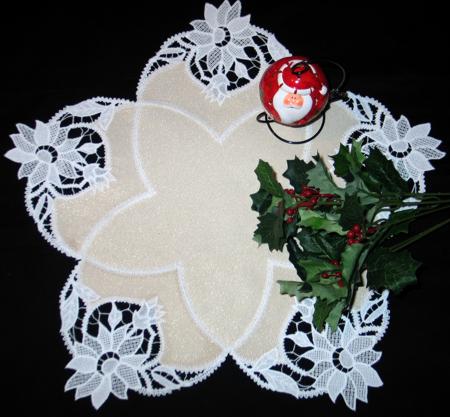
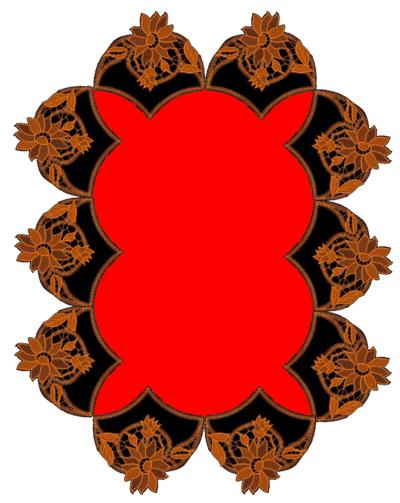
The FSL Battenberg Poinsettia Applique Doily is available in 3 sizes - for large (5x7), mega (6x10) and commercial (over 10") hoops. Different combinations of the pattern allow you to create beautiful doilies of various shapes and sizes.
To embroider this type of lace, please read our recommendations first.
Stabilizers: We recommend to use water-soluble mesh, such as Vilene. Vilene D0102 is a non woven dissolvable stabilizer which is imported into the US, is sold in large rolls and is sometimes repackaged under different brand names. Two of these brand names are Wash-Away and Aqua Magic. Film-like water soluble stabilizers, such as Solvy, are not suitable for Free-Standing Lace embroidery.
Threads: The thinner the thread, the finer the final product will be. That is why we recommend that at least one of the threads, either in the bobbin or in the needle, should be cotton, which gives bulk to the lace and makes it look hand-made. Embroidery polyester thread will make very fine weblike lace.
Embroidery rayon thread is too soft, it does not keep its shape and very often its color fades under the influence of chemicals from the watersoluble mesh.
If you are using 50- or 60-weight cotton, you can use it both in the bobbin and in the needle. If you use 40-weight cotton thread for the needle, you can use regular polyester bobbin thread.
We used Signature machine quilting cotton thread, but similar threads from other companies should work just as well.
Needles: We use size 80/12 embroidery needles and 80/12 metallic needles. Our experience shows that cotton thread used with metallic needles gives less lint. The needles should be sharp, so it's advisable to change them after every project.
Most Importantly: ALWAYS make a test stitch-out of the design and wash away the stabilizer. This helps you to select the threads, needles, stabilizers and settings of your machine correctly. DO NOT embroider several designs in one hoop.
Step One: Hoop 2 layers of water soluble mesh. Tighten the hoop. Insert the hoop in the machine and start embroidering. The machine will embroider the outline of the design and stop.
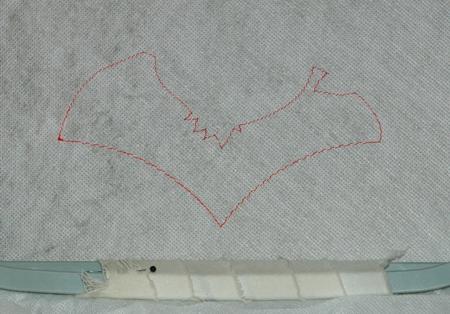
Step Two: Cover the outline with the applique fabric. Start the machine. It will embroider the outline again and stop.
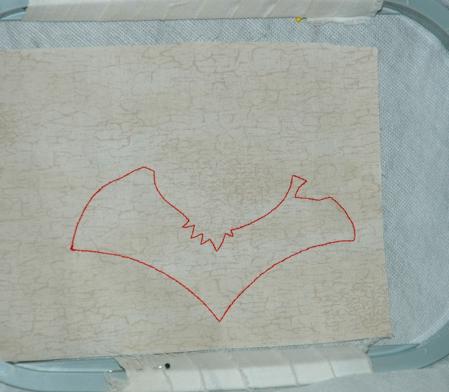
Step Three: With a pair of sharp scissors, cut away the fabric around the outline.
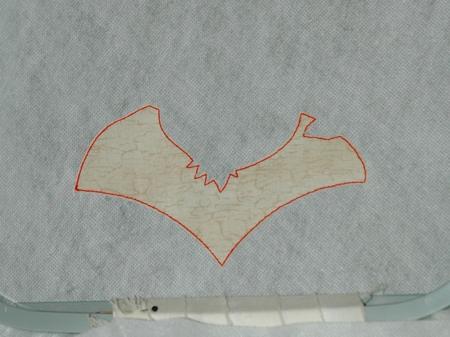
Step Four: Return the hoop into the machine and finish the embroidery. The machine will embroider the lace at this stage. Change threads, if needed.
Step Four: Cut away the excess stabilizer. Dissolve the remainder. Leave flat to air dry. Press with steam.
Your stitch out will look like this:
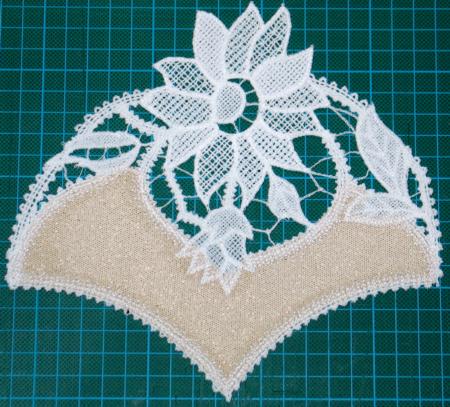
The finished size of the doilies, table runners and table toppers depends on the size of the design you embroider.
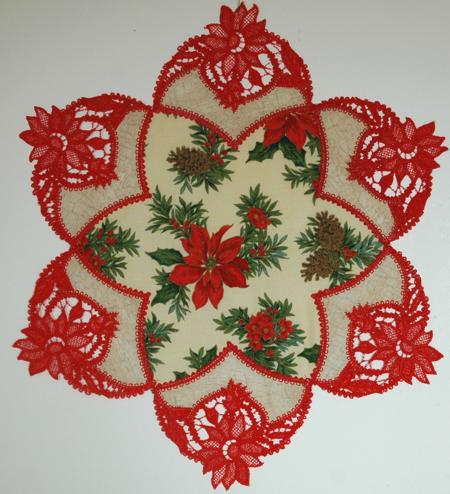
You will need fabric for applique and for the center of the doily. This maybe the same fabric, as seen on the first photo...
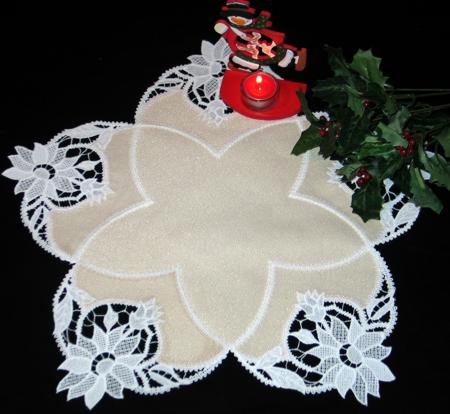
Or you can use different fabrics, as seen on the second photo.
Step One: Make a test stitch-out of the file. If you are satisfied with the results, embroider the file five times.
Rinse the stabilizer and leave to air dry.
Press all parts with steam. On your working table, lay out the designs in a frame.
By hand, join the parts in the places marked in red. Use the same thread with which you made the embroidery.
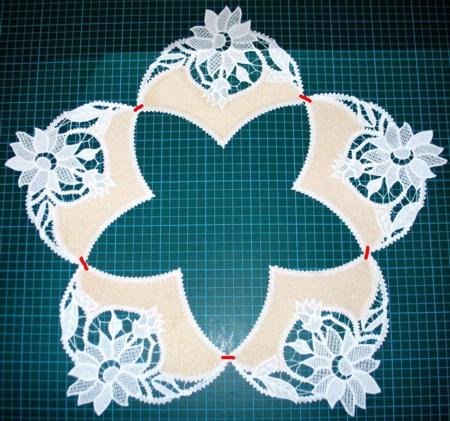
Step Two: Place the lace frame on a piece of fabric and pin in place.
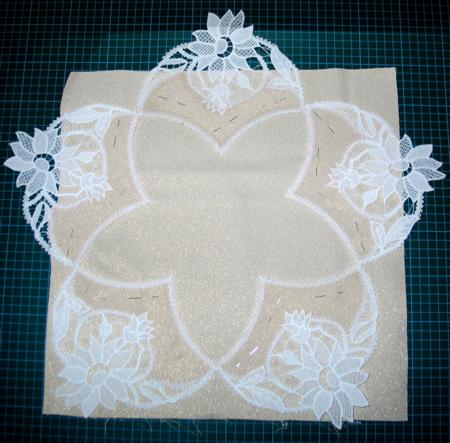
Step Three: Using a straight stitch set to 1mm, stitch along the inner outline of the lace, to attach the lace to the fabric. Step 1-2mm from your first stitch and straight stitch again. You will have two parallel lines of tiny stitches. Use the same thread as the one you used for embroidery.
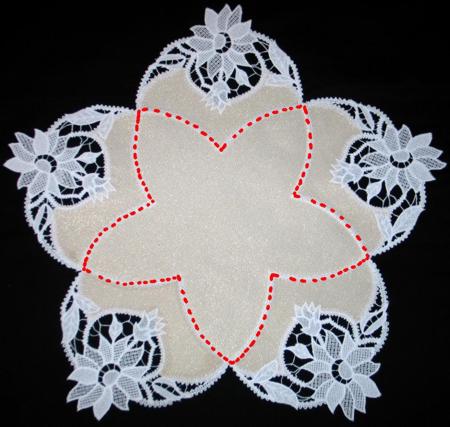
Step Four: Turn the work to the wrong side and with a pair of sharp scissors cut away the excess fabric close to the outer line of stitches.
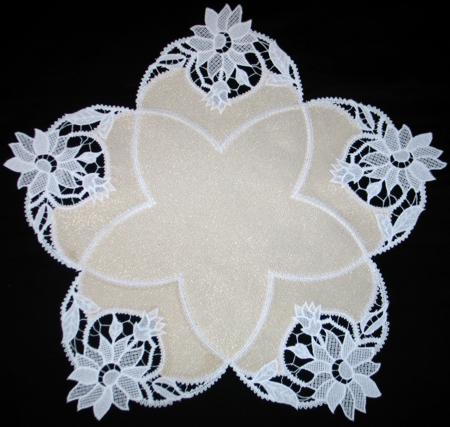
The possibilities of the design depend only on your time and patience. You can make doilies, tablerunners, tabletoppers and tableclothes of any sizes. Here are some examples.
For the smallest doily you will need 3 embroidered patterns.
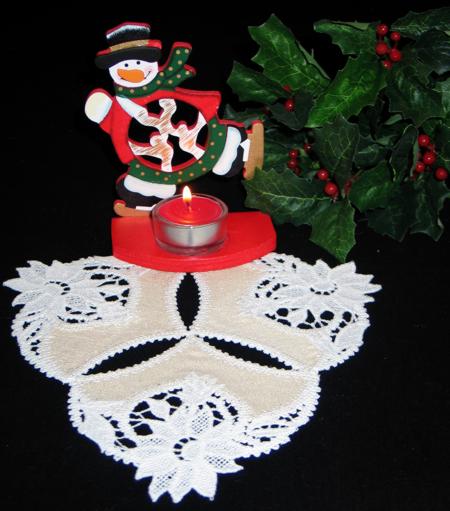
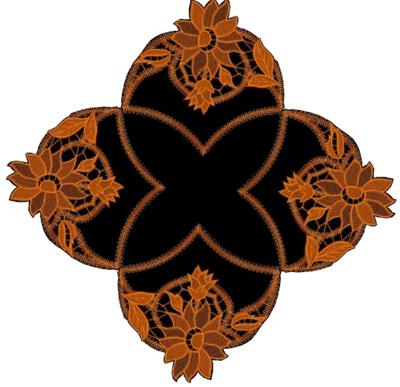
A doily with 4 patterns.
A doily out of 6 patterns.
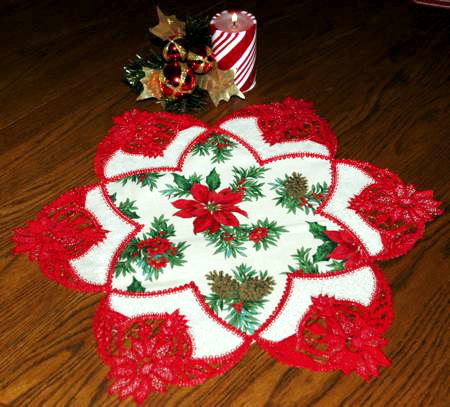
A table runner out of 10 patterns.
 Shopping Cart
 Check Out